Túrós Csusza
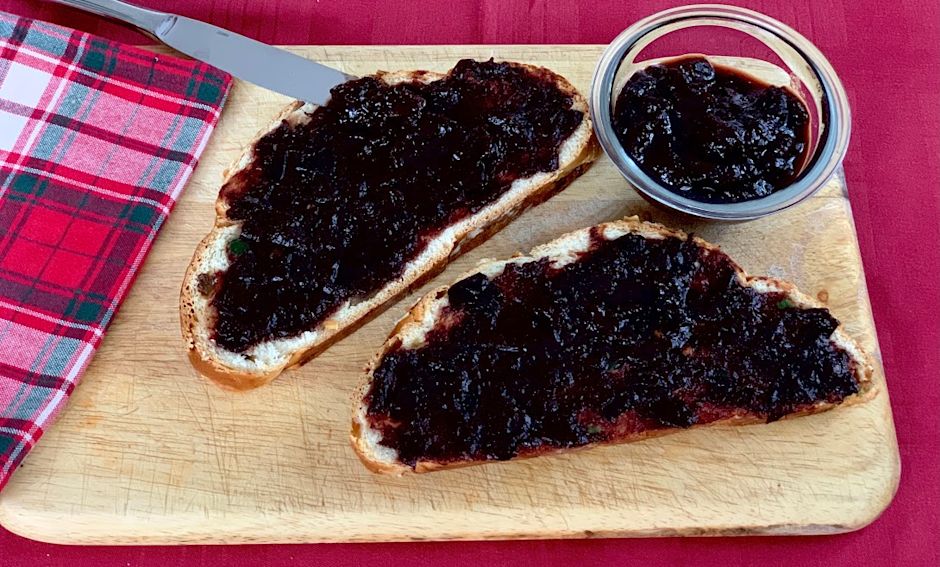
Plum jam (szilvalekvár): Be it a simple schmear atop a toasted bread, a rich garnish to foie gras, or a palacsinta filling, fruit preserves show up in many Hungarian dishes. The varieties are endless – peach, raspberry, strawberry, sour cherry – but it's the plum jam (szilvalekvár) that goes back furthest. Before sugar became cheap and widespread in the 19th century, people made szilvalekvár without it, laboriously stirring the fruit over fire for 12-14 hours into a creamy consistency.
Lángos

For many people in Hungary, a visit to the market hall doubles as a trip to the lángos vendor. The shopping bags can wait on the side while a palm-sized, deep-fried flatbread is wolfed down by the high-top tables. Historically, lángos was a byproduct of bread baking in the family home: To gauge the temperature of the wood-fired oven, a small piece of dough would be placed on its surface beside the ashes. Once baked through, the lángos was rubbed with garlic and spread with pork fat, sometimes sour cream, and consumed while still hot (“lángálló” which means “fireplace” was another name for it given its preparation). Around the turn of the 20th century, deep-frying replaced baking as the preferred method of lángos-making. At its best, the crispy, golden crust yields to a soft and doughy and steaming inside. Sour cream and cheese are standard toppings but options also include cooked cabbage, sausages, and red onions. Nutella too, at the new-wave vendors.
Liptauer

Liptauer (körözött): Named after the curd cheese of Liptov, in today's Slovakia, Liptauer is an orange-hued spread favored by people across the former Austria-Hungary. While many variations exist, the mixture almost always includes sheep's milk curd cheese (juhtúró), butter, paprika, minced onions, and caraway seeds. If in doubt, cold lager is always a good way to pair it. Recipe.
Kolbász
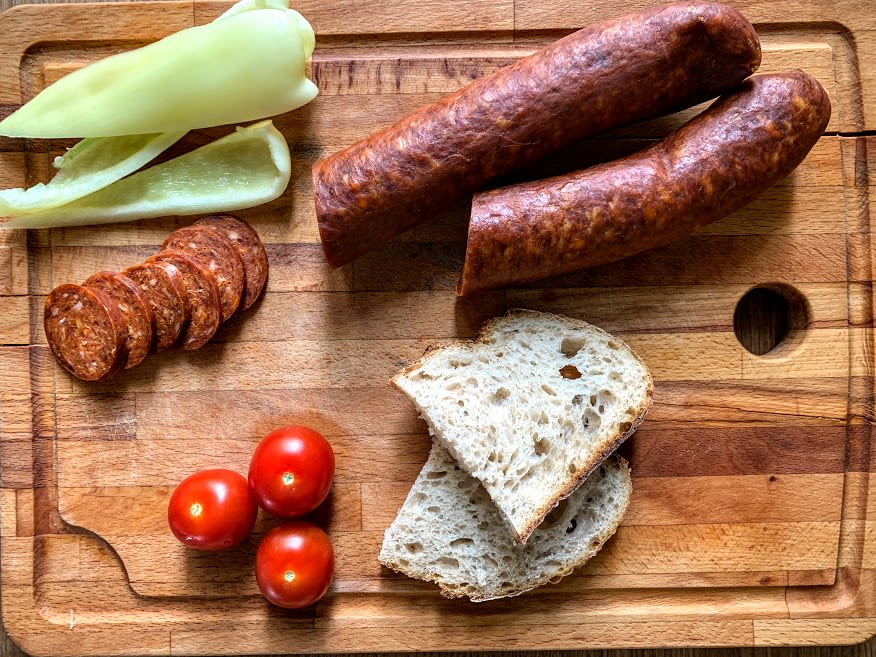
Cured sausage (kolbász): Cured meats are dear to Hungarian people and perhaps none more so than kolbász, traditionally prepared during the winter pig slaughter. Kolbász consists of a paste of meat, fat, and a paprika-heavy spice blend. The mixture is stuffed into a tubular casing – usually using the pig’s intestine – then smoked and dried. Sliced kolbász is highly versatile, appearing in many Hungarian classics, for example layered potatoes (rakott krumpli), and also as sandwich toppings. Most butcher shops in Budapest's Great Market Hall sell it. Feel free to ask for a sample first.
Szalámi

Traditional salami is a relatively recent type of preserved sausage in Hungary, dating back to the 19th century. Compared to kolbász, above, szalámi is thicker, aged longer, and usually made without paprika, hence the absence of an orange-red hue to it. A premium category is téliszalámi, recognizable by a white protective mold that grows on its surface during drying. Two historic companies, Pick and Herz, are still its main producers. Sliced szalámi works both as a snack and as a sandwich topping. Most higher-end Budapest grocery stores sell it.
zsíroskenyér
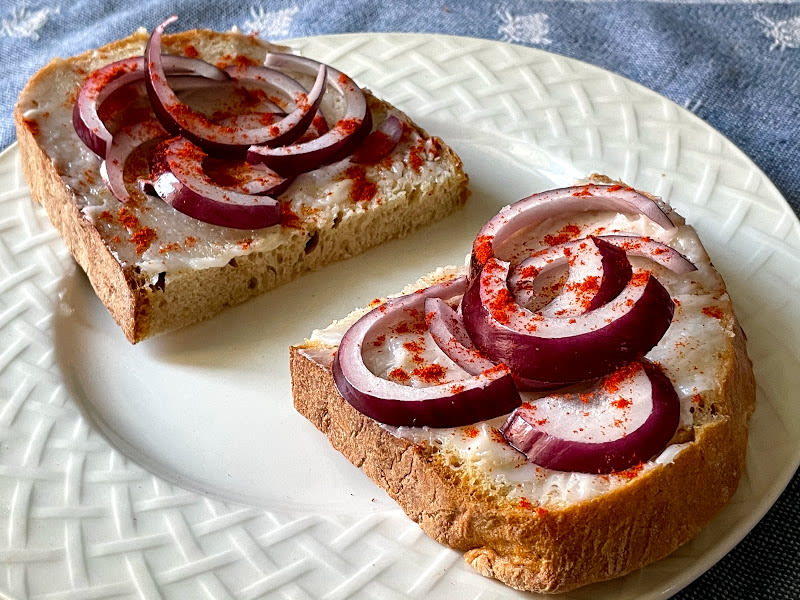
Bread spread with lard (zsíroskenyér): The tradition of spreading flavorful fat on crusty bread is alive and well in Hungary, too. While northern Europe uses butter, southern Europe olive oil, in Hungary creamy pork fat (lard) is the topping of choice. Sprinkled with rings of onion and a hint of paprika, the zsíroskenyér is a popular bar snack and pairs well with draft beer. A few places also serve a VIP version made with Mangalica lard. In Budapest, I recommend you try it in an old-school, unfussy neighborhood bar such as Grinzingi.